
Aesthetic dentistry is a branch of dentistry that focuses on aesthetically improving patients’ smiles. This field aims to achieve a more aesthetic and natural appearance by regulating the color, shape, size and position of the teeth. Through whitening, porcelain laminates, composite fillings and other aesthetic procedures, dentists offer solutions that suit patients’ individual needs and aesthetic preferences. Aesthetic dentistry not only enhances the beauty of the smile, but can also improve patients’ self-confidence and quality of life. In this way, patients can achieve both healthy and aesthetically attractive smiles. Aesthetic dentistry combines modern technology and expertise to provide patients with personalized and satisfying results.
Smile design:
Smile design is a process that brings together the fields of dental aesthetics and restorative dentistry. This design aims to achieve a smile that suits the patient’s facial structure, tooth form, color tone and general aesthetic preferences. The dentist designs a personalized smile in close collaboration with the patient, taking into account the shape, size, arrangement and shade of the teeth. Various methods can be used during smile design, such as teeth whitening, porcelain veneers, bonding or other aesthetic procedures. In conclusion, smile design refers to a customized dental improvement process to meet the patient’s aesthetic expectations and achieve a healthy, natural smile.
Zirconium
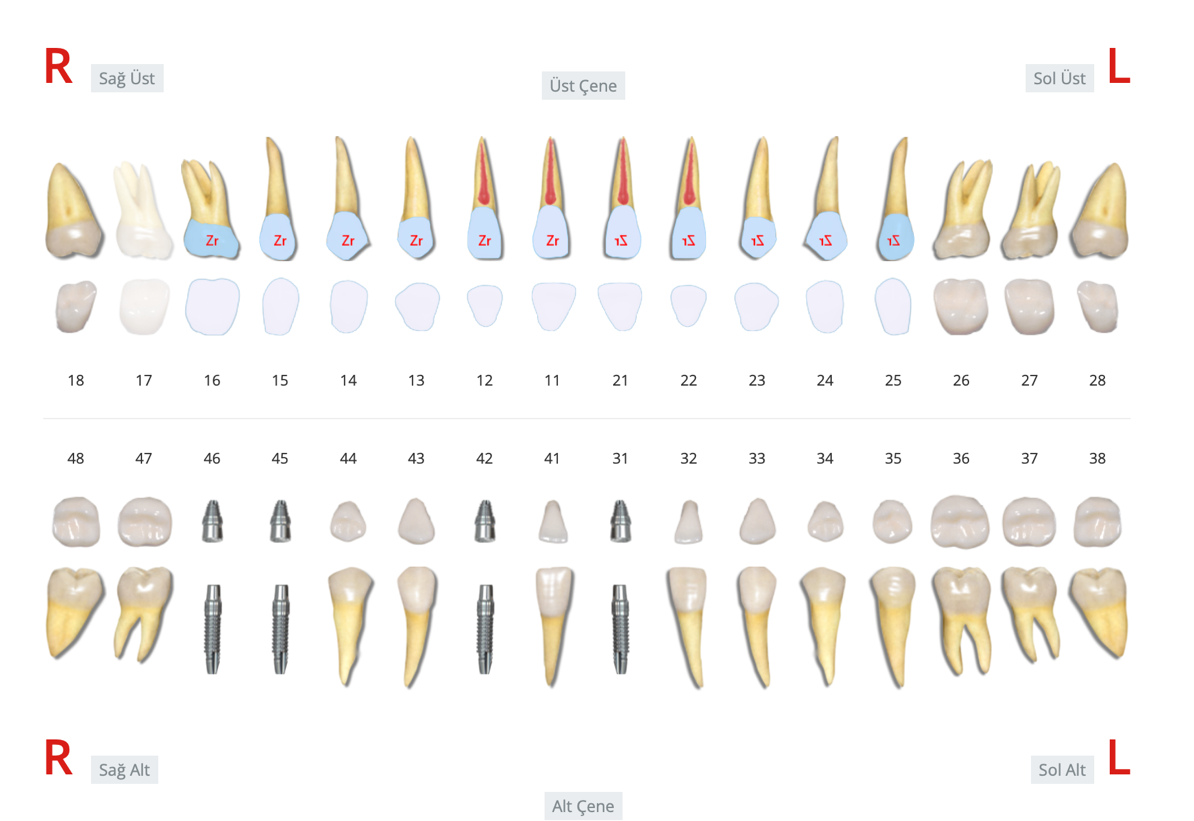
Zirconium is a durable and aesthetic ceramic material widely used in dentistry. This material is particularly preferred in various dental applications such as dental implants, porcelain veneers and bridges. The advantages of zirconium include its ability to mimic natural tooth color, longevity, low risk of allergic reactions and durability. With these features, zirconium stands out as a reliable and aesthetic option in modern dentistry.
E-max
E-max (Empress for Maximum Esthetics) porcelain is a high-quality ceramic material used in dentistry for aesthetic restorations. This material is especially preferred for dental restorations such as porcelain veneers, zirconium crowns and crowns. e.max ceramic is known for its durability, natural light transmission and aesthetic quality. By using e.max, dentists have the opportunity to achieve the closest results to the natural tooth structure for their patients. This material has been widely adopted to offer long-lasting and aesthetically satisfying results to patients with high expectations for dental aesthetics.
Lamina veneers are thin, specially designed porcelain veneers used in dental aesthetic applications. These veneers are bonded to the surface of the front teeth to improve the shape, color and appearance of the teeth. Lamina veneers are preferred to correct cosmetic problems of the teeth such as minor defects, discoloration, cracks or gaps. This application allows the patient to achieve a more aesthetically appealing smile while preserving the natural tooth structure. Lamina veneers are generally durable and offer long-lasting results, boosting patients’ smile confidence. Dentists help their patients achieve an aesthetically satisfying and natural look with lamina veneers designed to suit their specific needs.
The teeth bleaching services we offer at our clinic include home and in-office options to suit the needs of our patients.
Home bleaching kits are supplied with special trays containing a specially formulated gel that patients can use in the comfort of their own home. These kits are designed to achieve the desired whitening results with regular use, usually over several weeks. Home whitening is a preferred option because it is easy to use and allows patients to continue the treatment at their own pace.
In-Office Teeth Whitening is a faster and more intensive procedure performed by specialised dentists at our clinic. In this method, the professional team at our clinic quickly lightens the patient’s tooth colour by using powerful whitening agents containing hydrogen peroxide or carbamide peroxide. In-office whitening is an ideal option, especially for patients who want short-term results. Both methods are recommended by our specialists according to individual needs and are safe to use. Which option is preferred depends on the patient’s dental condition, preferences and time frame.

Implantology is a branch of dentistry used to treat missing teeth. This method involves the placement of titanium implants in the jawbone, which act like natural tooth roots and provide a solid foundation for the prosthetic teeth placed on them. Maxillofacial surgery represents a field that covers surgical interventions in the jaw and facial area. These surgical procedures aim to correct various jaw problems, reduce pain and provide functional improvements. Implantology and maxillofacial surgery are important specialties in the field of dentistry, providing patients with aesthetic and functional permanent solutions.
All-on-four implant treatment
The All-on-4 implant procedure involves the strategic placement of four implants into the jawbone, providing a fast and effective solution for edentulous or toothless patients. These titanium implants provide a durable foundation for the prosthetic teeth that are fixed on them, allowing patients to quickly return to their natural smile and chewing function. The All-on-4 procedure offers patients an aesthetic and functional dental rehabilitation with the advantage of fewer implants and shorter healing times, as well as a different approach than traditional implant methods.
Impacted tooth surgery
It is a surgical intervention performed when the tooth cannot erupt in the correct position in the jawbone or remains under the gum, causing developmental problems. This surgical procedure usually involves removing the impacted tooth, making corrections to the jawbone or making the necessary adjustments to harmonise with other teeth. Impacted tooth surgery is a specialised intervention to optimise dental health and oral function, which can also lead to aesthetic and functional improvements.
Orthodontics – Digital Orthodontics – Transparent Plates
Orthodontics is a branch of dentistry that deals with the correction and regulation of tooth and jaw structure. It deals with irregular alignment of teeth, problems with jaw joints, jaw structure disorders and similar conditions. Orthodontic treatment usually involves the use of various appliances such as metal brackets, clear aligners or braces. These treatment methods play an important role in correcting teeth, improving jaw relationships and aesthetic smile design. Orthodontic applications are applied to increase the functional health of patients, correct chewing patterns and achieve a healthier smile. Orthodontic treatment provides aesthetically satisfying results while improving the general oral health of the person.
Digital orthodontics and clear aligners Digital orthodontics and clear aligners represent an innovative and aesthetic approach to orthodontic treatment brought about by modern technology. Digital orthodontics replaces traditional measurement methods with digital scanning and imaging techniques through the use of computer technology. This allows dentists to create a more precise and customised treatment plan. Clear aligners are transparent and removable appliances used to straighten and align teeth. These aligners offer a more aesthetic option compared to traditional braces and have less impact on a person’s daily life. When combined with digital orthodontics, a more comfortable and effective treatment process is provided for the patient. These technologies offer patients more predictable results, making the process of straightening teeth more effective and comfortable
Endodontics is a field of dentistry that analyses the internal structure of the tooth. This branch deals with the pulp (soft tissue on the inside of the tooth) and the root canals of the tooth, which are usually the living tissues of the tooth.Endodontic treatments usually aim to eliminate inflammation, infection, damage or other problems inside the tooth.

Root Canal Treatment The most common endodontic treatment is root canal treatment. This treatment involves cleaning the inflamed or infected tissues inside the tooth and then filling the root canals. Thus, the tooth is kept in the mouth for many years.
Abscess Treatment
Infections in tooth root canals can sometimes result in abscesses. With abscess treatment, the infection is controlled and the tooth is treated.
Re-treatment (retreatment)
It is the need for renewal of a previously performed root canal treatment. This process aims to protect the tooth in cases where the previous treatment was ineffective.
Endodontics is an important branch of dentistry that focuses on protecting and improving oral health by offering various treatment options to patients presenting with toothache, sensitivity and other symptoms. These treatments provide long-term relief to patients by preserving the natural structure of the tooth.

Periodontology (Treatment of Gum Diseases)
It is a speciality in dentistry that examines the health of supporting structures such as gums, peri-dental tissues and jawbone. This field includes topics such as gum diseases, periodontitis and implant treatments. Periodontological treatments include procedures such as scaling, gum surgery and periodontal pocket treatment. Healthy gums and supporting tissues are critical to overall oral health. Periodontology is a discipline aimed at optimising the long-term oral health of patients by maintaining the health of these structures.

It is a speciality in the field of dentistry that focuses on children. Experienced dentists in this field focus on assessing, treating and improving the oral and dental health of children. Dentists, who monitor children’s dental development and create treatment plans tailored to their specific needs, approach oral health problems in childhood with special expertise. They also educate children about dental care and apply various methods to teach them healthy dental habits. Pediatric dentistry practices focus on instilling oral health awareness in children at an early age, laying the foundation for a healthy dental development and lifelong oral health.

It refers to a speciality of dentistry that is applied to correct and restore dental disorders resulting from tooth loss, tooth deformities or other aesthetic problems. This treatment includes various restorative methods such as dentures, bridges, fixed or removable dentures. Prosthodontic treatment aims to preserve the patient’s natural tooth structure and achieve functional oral health. Dentists try to achieve aesthetically satisfying results with prostheses designed to suit the individual needs of the patient. This treatment aims to improve the patient’s smile aesthetics by eliminating tooth deficiencies, while at the same time restoring chewing function and speech ability. Prosthodontic treatment offers comfortable and long-term solutions to patients by using modern dentistry technology and materials.

First Examination and Dental Radiology
One of the services we offer at our clinic, initial examination and dental radiology, aims to provide our patients with a personalized and comprehensive oral health assessment. The initial examination is performed by our experienced dentists and includes the process of assessing our patients’ current oral condition, checking tooth and gum health, identifying potential problems and creating treatment plans.

Dental radiology is an important element in modern dental practice. The digital radiography technology we use allows us to obtain clearer and more detailed images with low doses of radiation. In this way, we can examine the tooth and jaw structure of our patients more safely than traditional radiography. Dental radiology helps accurate diagnosis and treatment planning in many areas such as caries detection, tooth roots, jawbone condition and implant treatments. Our initial examination and dental radiology services guide our patients to take the basic steps to achieve a healthy mouth and smile. With the advanced technology used in our clinic and our expert team, we maintain our commitment to providing the most effective and reliable oral health solutions to our patients.
2 Dimensional Imaging (Panoramic Film)


One of the services we offer at our clinic, initial examination and dental radiology, aims to provide our patients with a personalized and comprehensive oral health assessment. The initial examination is performed by our experienced dentists and includes the process of assessing our patients’ current oral condition, checking tooth and gum health, identifying potential problems and creating treatment plans.
2 Dimensional Imaging (Panoramic Film)

3D imaging (Dental tomography)

3D Intraoral Scanning

Intraoral camera


Digital dentistry represents a modern approach that offers a faster, more effective and comfortable dental treatment experience compared to traditional methods. Our clinic offers a pioneering service to its patients with the advantages of digital dentistry technology. Digital imaging techniques provide high-resolution images for precise dental examinations and diagnoses, making treatment planning more accurate and personalised. Furthermore, digital dentistry includes innovative tools such as 3D mouth scanning, CAD/CAM technology and intraoral cameras. This provides our patients with faster treatment processes, minimally invasive procedures and aesthetically satisfying results. Digital dentistry aims to provide our patients with a treatment experience of the best standards by combining our clinic’s oral health services with modern technology. With our advanced technology devices in our clinic, we can now design smile aesthetics and many other prosthetic procedures in digital environments and produce them with 3D cad-cam printers, thus preventing many errors caused by human factors.